Strand Descriptions and Times for Confratute 2008
Week One Strands 10:30-12:15 Monday, July 7
8:30-12:00 Tuesday, July 8
- SCHOOLWIDE ENRICHMENT MODEL (SEM)Joseph S. Renzulli & Sally M. Reis, University of Connecticut. The general sessions of this strand (Monday & Tuesday) will provide an overview of The Schoolwide Enrichment Model (SEM) and the breakouts (Wednesday-Friday) will focus on specific strategies for implementing the model in a variety of schools with students of different ages and demographic backgrounds. The model, which is based on 30 years of research and development, is a comprehensive system for infusing "high-end learning" into total school improvement efforts while simultaneously challenging high achieving students. Specific strategies include the development of Total Talent Portfolios, Curriculum Modification Techniques, and Enrichment Teaching and Learning. Five books are recommended for all participants in this strand and are available for purchase at Confratute. Breakout SEM Strands (Wednesday & Thursday 8:30-12:00, Friday 8:30-9:30)
- PRIMARY (Gr. K-2)Susan Baum, International Center for Talent Development; Gail Herman, Garrett College, McHenry, MD & Lesley University, Cambridge, MA. This session will demonstrate practical strategies for implementing SEM in the primary grades. Play with the three different types of activities in the Enrichment Triad Model. Learn how to schedule and debrief Type I experiences by hearing a guest story teller. Explore ways to incorporate critical and creative thinking activities into your classroom and curriculum. Explore what Type III looks like at the Primary level. Other topics will include enrichment clusters, interest centers, and curriculum compacting.
ELEMENTARY (Gr. 3-5)Susan Griggs, SEM/DI Consultant, Westerly, RI. This breakout strand will guide participants with hands-on strategies for using the Schoolwide Enrichment Model in daily instruction. Topics will include various uses of the Total Talent Portfolio for the student-centered classroom, developing rigorous activities based on the Enrichment Triad Model, curriculum compacting with interest-based replacement activities, and a simulation of Enrichment Clusters. Active learning strategies will be used for processing the service delivery components of the SEM.
ELEMENTARY (Gr. 3-5)Mary Sullivan, University of Connecticut. This strand will offer a program overview in light of providing how-to strategies to fully implement SEM at the elementary level from the perspective of the SEM specialist.
ELEMENTARY (Gr. K-5)Nancy Titchen, Goodwin Elementary School, Mansfield, CT. This strand provides practical ideas for implementing the SEM at the elementary level. - MIDDLE SCHOOL/JUNIOR HIGHWayne Trembly, Mansfield Middle School, Mansfield, CT. Details, samples, examples, “how-to’s,” hands-on, and perhaps a field trip to an SEM school will be shared with participants. The hope is that during the breakout we can personalize SEM for your school and your situation. Please come prepared to let us know how we can help you to successfully implement SEM, or how we can assist you in bringing SEM to the next stage.
- SENIOR HIGHMeredith Greene, Annapolis Valley Regional School Board, Nova Scotia, Canada. Participants in this strand will consider key issues that influence successful implementation of SEM in high schools. Mini-lectures, small group discussions, and activities will focus on the major concepts of enrichment teaching and learning, the Secondary Enrichment Triad, programming options, and classroom strategies.
- ADMINISTRATORNora Friedman, South Grove Elementary School, Syosset, NY. This strand breakout is specifically geared to school principals. What you want to know about the link between SEM and assessments and standards, how to adapt SEM to your school, the best way to approach professional development, issues affecting SEM implementation, where to get funding, and tips for managing day-to-day business are just some of the nitty-gritty details that will be addressed. Opening Doors: The Administrator's Guide to the Schoolwide Enrichment Model and the Art of Schoolwide Enrichment: A Resource Guidebook for Teachers, Enrichment Specialists and Principals are recommended reading for this breakout.
- COORDINATORSNancy Eastlake, QuEST Program, W. Hartford, CT. Coordinators and facilitators will consider a variety of issues, strategies, and audiences as they begin to implement the SEM in K-12. Topics to be covered will vary depending upon the needs of the participants, but are likely to include scheduling; coaching teachers; troubleshooting interest development centers, enrichment clusters, and Type III’s; budgeting; organizing; maintaining a healthy program; writing newsletters; creating five-year plans; thinking about the community; and conducting needs assessments.
- MULTICULTURAL POPULATIONSCatharina deWet, University of Alabama, Tuscaloosa, AL. We will explore principles of multicultural education and synthesize them with the principles of the Schoolwide Enrichment Model. We will look at characteristics of special populations of children and how to identify the high ability students in our classrooms. We will also brainstorm and plan Type I, II, and possible Type III activities, and think through differentiation for strengths while scaffolding for possible learning gaps, language, and cultural gaps.
- DIFFERENTIATING CURRICULUM AND INSTRUCTION (ADVANCED)Sandra Kaplan, University of Southern California, Los Angeles, CA. The elements that define an appropriately differentiated curriculum for gifted students with particular emphasis on translating theories into practices will be the focus of this strand. Various curriculum designs, such as "frames, sandwich lessons, and content maps" will be the means by which differentiated curriculum is developed in relationship to the basic or core curriculum. Acceleration, depth, complexity, and novelty will be addressed in both identifying differentiation of curriculum and the instructional strategies that underscore the effective teaching and learning of such curriculum. The integration of the concepts of dabbling and the classics will be infused into the design of differentiated curriculum.
8:30-9:30 Friday, July 11
- EDUCACHING: A HIGH-TECH SCAVENGER HUNT THROUGH THE CURRICULUMSally M. Dobyns, University of Louisiana-Lafayette, Lafayette, LA. In this session participants will learn to use GPS handheld receivers and will seek content-laden caches around the UConn campus and in the surrounding area. The goals of the session are for participants to make connections to the differentiated teaching and learning they plan for their own students and to experience a hobby/sport that can engage them and their families for many years. Equipment will be provided, but if you have any of the following items, please bring them: GPS receiver, compass, or digital camera. We will be outdoors, so appropriate walking shoes, hat, sunglasses, and sunscreen will help you maximize these experiences. Caches have been placed near and far, high and low, and accessible to all who seek them!
- SILK SCREEN PRINTINGVidabeth Bensen, House of Life Prints, Pittsboro, NC. Silk screen printing is an art medium that can be used to enhance most areas of the curriculum. Classroom teachers, g/t teachers, art teachers, and others find this printmaking process ideal for creating designs for T-shirts, cards, banners, posters, and prints suitable for framing. The first session is a step-by-step presentation of the process. Subsequently, participants will create their own original prints. Emphasis will be placed on using the process in the classroom. The studio will be open every day for participants to work with the instructor in small groups or individually. There is a $5.00 materials fee to cover the cost of supplies used in the studio. Screens and squeegees will be available for purchase so you can return to your school ready to start printing with your students.
- DEVELOPING STUDENTS' POTENTIAL THROUGH DIFFERENTIATIONChristine Briggs, University of Louisiana-Lafayette, Lafayette, LA. Do you have a variety of talent potential in your classroom or school? Are you and your colleagues asking how you can meet all your students' needs? If you answered yes to these questions, this is the strand for you. The goal of this strand is to provide a starting place for teachers and administrators to begin their exploration of differentiation strategies. So, after discussing the why of differentiation, we will explore and learn some how-to.
- STUDENTS ARE NEVER TOO YOUNG TO BE RESEARCHERS!Cindy Nottage & Virginia Morse, Active Learning Systems, Epping, NH. Looking for exciting ways to engage your students, integrate tested language arts skills into core curricula, and address the talents and needs of every student in your class? Search no more. In this hands-on strand, you will learn about The Independent Investigation Method (“Double I M”), a standards-based research model (K-12) being used in classrooms and special programs nationwide. You will experience how to teach all primary/intermediate students the basic skills of research and will see how G/T students can apply these skills to independent studies both as part of the regular curriculum and as enrichment. You will learn a variety of elementary-level strategies that can be used with either the 7 Steps of IIM or your own research model.
- PODCASTING WITH A PURPOSEBrian Housand, University of Connecticut. Podcasting is a perfect way for educators to engage students in creative productive learning and to deliver content in an exciting and appealing way. Discover some of the best educational resources from the over 100,000 free audio and video podcasts available. Learn how you or your students can create and publish podcasts with or without an iPod. This strand will show you how to integrate purposeful podcasting into your teaching and into your students' projects. Participants are encouraged to bring their own Macintosh laptops for this strand.
- HONORING THE SOCIAL AND EMOTIONAL LIVES OF GIFTED STUDENTSThomas Hébert, University of Georgia, Athens, GA. Educators want to understand and appreciate the social and emotional lives of students in their classrooms in order to guide them in their development. This interactive strand offers an overview of the social and emotional issues facing gifted young people. Topics include heightened sensitivity, peer group acceptance, friendships, perfectionism, underachievement, and dealing with community, family, and teacher expectations. Through discussions, case studies, activities, and use of reading materials and media, teachers and counselors gain a better understanding of their students and learn to facilitate classroom strategies to support their social and emotional development.
9:45-10:45Friday, July 11
- COACHING TEACHERS TO SUPPORT DIFFERENTIATION & COMPACTINGCaroline S. Cohen, Heads-Up! Educational Consultant and Coach, East Windsor, CT. This hands-on strand will provide a simple, yet powerful technique for creating peer coaches who will train and support their colleagues in differentiation and curriculum compacting. Specific topics include: the creation and management of a differentiated classroom, flexible grouping, tiered assignments, curriculum compacting, differentiated assessment, and grading. Learn how to articulate what differentiation is and isn't and how to describe what teachers, students, parents, and administrators can expect to encounter in a differentiated classroom. Participants will have an opportunity to try coaching and being coached and will learn how to establish a successful peer coaching program in their schools.
- DIFFERENTIATING THE CURRICULUM THROUGH THE PERFORMING ARTSBarry Oreck, Professional Development, New York, NY. Drama, music, and movement activities can be woven into the curriculum to deepen understanding, build learning and problem solving skills, and improve both verbal and non-verbal communication. This strand will help participants use the arts to build a creative, cooperative classroom environment and to maintain an artistic attitude amidst the pressures of the school day. Participants will learn and practice the skills needed to facilitate authentic arts experiences in the classroom and to effectively adapt arts activities to enhance other areas of the curriculum. Over the course of the week, participants will learn and practice a variety of activities that can be adapted for use in literacy, social studies, science, and math. We will also discuss how to identify artistic talent in students and how to assess artistic products and processes.
- BOOKS AS HOOKS FOR CREATING LIFELONG READERSSusannah Richards, Eastern Connecticut State University, Willimantic, CT. This strand will include an overview of books that invite the reader to explore interests and ideas. In addition to the dozens of books and book lists that will be highlighted, specific focus on how to use books to meet the needs of gifted students will be emphasized. Featured books will include recently published fiction and non-fiction books that lead to critical and creative thinking experiences. Discussion and activities will focus on resources for locating and evaluating children’s books, information on children’s book publishing, strategies for sharing books with gifted students, and ways for students to respond to books. A medley of books from all genres will be used to illustrate how to create learning experiences for students. There will be many opportunities to examine and share great books.
- STRATEGIES FOR ADVANCING AND DIFFERENTIATING CURRICULUMJann Leppien, University of Great Falls, Great Falls, MT. The challenge that most teachers face in their classrooms is creating and managing learning experiences that take into account the varying degrees of readiness levels, interests, and learning profiles of our students. So how do we differentiate our instructional units or lessons so that the activities are respectful of all learners? This workshop will focus on (1) generative ideas and concepts; (2) evaluating differentiated lessons developed by teachers to see what it looks like when teachers try to make curriculum and instruction appropriately challenging and interesting for individual learners; (3) acquiring and using a variety of instructional strategies that encourage differentiation and ascending levels of intellectual development; and (4) viewing curricular resources on the Internet that can assist teachers in differentiating lessons for their students.
- CREATING STUDENT MOVIES WITH YOUR MACFrank Sineni, St. Paul Public Schools, St. Paul, MN. The world of moviemaking is coming to the classroom! Participants in this strand will learn to enhance student products and their own presentations using Apple's iMovie. Participants are encouraged to bring digital movie or still cameras as well as their own Macintosh laptops to add to their learning experience. Creative beginners are welcome!
- USING RENZULLI LEARNING SYSTEMS IN YOUR CLASSROOM OR SCHOOLSheelah Sweeny, University of Connecticut. Join our guided introduction to the Renzulli Learning System, the new vehicle for delivering content through web-based resources in the format of the Enrichment Triad Model. Learn about all aspects of the system and see some of the exemplary websites contained in the database. Learn how to use different features in the system to maximize student learning. Practical suggestions for effective implementation with individual students and whole classes will be shared, along with independent student project guidelines and ideas for making curriculum connections. Renzulli Learning is a great tool for providing differentiated learning resources for all students in your class. The vast resources in Renzulli Learning allow for students to tap into their creativity and explore topics of their interest.
- ANIMATION: LIGHTS! CAMERA! ACTION! DEVELOPING TYPE III AUDIOVISUAL PROJECTSGreg Murin, Hopewell Junction, NY & John Fogarty, Cannon Falls, MN. This strand provides instruction in guiding students through the process of creating stop-motion animation using a digital camera and a laptop computer. The use of computer equipment and programs will be demonstrated and practiced by participants as they create their own animated movies. This simple process can then be used by teachers in their own classrooms. An introduction to 3-D animation will also be given. A how-to lesson on stop-motion computer animation will set the stage for participant production. Music and narration will be added to the products as desired. A laptop computer with a digital camera will increase the participation, but are not necessary to take part in this strand.
- STRATEGIES FOR TEACHING/COUNSELING GIFTED KIDS WITH AD/HD, AS, OCD, AND TSPat Schuler, Creative Insights, Castleton-on-Hudson, NY. This strand will examine how giftedness and the exceptionalities of AD/HD, Asperger Syndrome, Obsessive Compulsive Disorder, and Tourette's Syndrome are manifested in the classroom. Administrators, educators, staff, school counselors, psychologists, and parents will learn strategies they can use to help these twice exceptional kids and their families navigate the educational and special educational systems.
- MENTORING MATHEMATICAL MINDS: TEACHING MATH TO TALENTED ELEMENTARY STUDENTSM. Katherine Gavin, University of Connecticut. This strand provides an overview of research-based, innovative curriculum to meet the needs of talented elementary students. Participants will explore how to challenge and excite talented math students with hands-on activities from award-winning math units. Each unit involves students as practicing mathematicians in a particular career field from an archeological dig to a Himalayan expedition. Students learn to think and reason at high levels, carry on sophisticated mathematical discussions, and write about their thinking in student journals-just as real mathematicians do! The investigations combine advanced content based on the five major NCTM Content Standards (number, algebra, geometry, measurement and data analysis, and probability) with the best practices of gifted education.
- GUIDING STUDENTS TO SELF-UNDERSTANDING THROUGH LITERATURE AND FILMThomas Hébert, University of Georgia, Athens, GA. Gifted students have a need to develop self-understanding throughout childhood and adolescence. Educators can help them reach that understanding through effective classroom strategies. In this interactive strand, teachers learn to use high quality literature, biographies, and movies to provide their students support with social and emotional development. By interacting with good books and films for young people, teachers examine how to effectively infuse this approach into the curriculum enabling them to guide students to reach self-understanding.
- HANDS-ON ENRICHMENT IN SCIENCE (Grades 3-8)Richard Bothmer, Science Education Consultant, Brookline, NH. Are you scientifically challenged? Wonderful! We want you! Together we will dispel any science anxiety and replace it with scientific enthusiasm. The strand emphasis will not be on science facts, but on how science works. We’ll do lots and lots of labs. Some real. Some, well, fabulous, as when you trap and dissect a snorg. Don’t plan on sitting down much. We’ll be out and about finding fascinating science everywhere. Bring your traditional five tangible senses and your five intangible senses: Sense of Curiosity, Wonder, Imagination, Adventure, and Respect. Students walk into our classes loving science and it is our responsibility that they walk out the same way. We can do this. Piece of cake!
- THE ART OF SHADOW THEATRE: THE ULTIMATE ENRICHMENT TOOLKristin Berman, The College of New Rochelle, New Rochelle, NY. From the hand shadows of early cave dwellers to the ancient emperors of China to Broadway, the magical art of shadow theatre has been used for millennia in every form of theatre. Learn the special effect techniques of this powerful mode of expression as you create all the components for your own theatre piece using principles of creative problem solving, science, engineering, art, and storytelling. There is a job for everyone: building the stage, writing the script, creating the puppets with their moving mechanisms, composing the sounds, and presenting the performance. Don’t miss this powerful secret of illusion, and learn a skill that will lead to compelling classroom engagement and a unique way to explore and express the imagination! Resources will be provided.
- RAISING STUDENT ACHIEVEMENT THROUGH CLUSTER GROUPING AND DIFFERENTIATIONMarcia Gentry, Purdue University, West Lafayette, IN. Total school cluster grouping is a logical, research-based model that helps teachers improve the achievement of all students. Differentiation must accompany any form of grouping and provides teachers with a powerful tool to reach their individual students. In this strand you will learn the what, the why, and the how of the model and investigate student-based differentiation strategies that will encourage important, quality work from students. Site-specific implementation suggestions will be considered and participants will leave with enough information to return home and implement the model.
- UNLEASHING THE POWER OF POWERPOINTJanine Firmender, Stony Brook Elementary School, Rockaway Township, NJ & Nancy Heilbronner, University of Connecticut. Microsoft PowerPoint is a powerful tool in the hands of today’s students and their teachers. It can be so much more than a simple presentation program. Learn how to assist your students in creating engaging presentations and interactive multimedia projects, beyond the bulleted templates, with simple PowerPoint functions that you have yet to discover. Participants in this strand will utilize PowerPoint as 1) a means to building creative presentations, 2) a graphic design program, 3) an interactive A/V program to display and organize course content, and 4) a format for audio and video productions. Expertise using PowerPoint is not necessary.
- SYSTEMS AND MODELS IN GIFTED EDUCATIONE. Jean Gubbins, University of Connecticut. As educators, we reflect on students’ learning needs. We want to identify and nurture their obvious and potential talents and abilities, and we need to ensure that we use research-based findings to determine the following: Who are the gifted? How do we serve them? These questions cannot be dealt with separately; therefore, it is imperative to become familiar with research-based systems and models in gifted education that include an integrated set of principles and procedures to inform and guide us as we encourage students to learn at high levels. This session will feature several models in gifted education.
- BOOKMAKINGCindy Lassalle, ESA Lower School, Lafayette, LA. At each meeting of this hands-on strand, participants will create several small books to accumulate a sampler set of cut, folded, sewn, and/or glued books. They will explore kinds of, purposes for, and shapes of books to stimulate and challenge their creativity and provide ways to learn and to demonstrate knowledge in any curriculum area. Participants will be encouraged to create images or text in at least one of the books. We will explore using some inexpensive, some recycled, and some artist quality materials. This can be both an exploration of self-expression and a practical resource. There will be a $5.00 materials fee payable to the instructor at the first strand meeting.
- HELPING STUDENTS SET GOALS, GET ORGANIZED, AND SELF-REGULATE BEHAVIOR FOR ACADEMIC SUCCESSAngela Housand, University of Connecticut. Help students learn to be more productive and self-motivated by setting clear goals, developing self-regulated behavior, and creating a goal-oriented environment both in school and at home. This strand will provide specific strategies for helping students self-regulate and organize their behaviors and study patterns to achieve academic goals.
- TEACHING STUDENTS TO CONDUCT HISTORICAL RESEARCH IN A DIFFERENTIATED LEARNING ENVIRONMENTSally M. Dobyns, University of Louisiana-Lafayette, Lafayette, LA. Primary sources, raw and rich evidence of the past, beg for interpretation. When students examine primary sources such as public records, personal documents, artifacts, epitaphs, maps, and photographs, the fascination is immediate, the curiosity is powerful, and the natural outcomes are meaning-making questions driven by each student’s personal interests and points of reference. High levels of student engagement provide fertile ground for the development and pursuit of essential questions in historical inquiry, leading to authentic student research in the discipline of history. This session will focus on utilizing the natural markers for differentiating instruction to facilitate students’ historical research process. ($5.00 materials fee)
- MOTIVATING STUDENTS: STRATEGIES TO REVERSE UNDERACHIEVEMENTDel Siegle, University of Connecticut. Why are some gifted children willing to tackle new challenges while others seem insecure or uninterested? Are there strategies we can implement that promote an achievement-orientated attitude? While there are many factors that contribute to achievement, underachievementand achievementoriented students exhibit four key traits: 1) they believe that they have the skills to perform well, 2) they expect that they can succeed, 3) they believe what they are doing is meaningful, and 4) they set realistic expectations and implement strategies to successfully complete their goals. We'll discuss how to improve student achievement by addressing these four factors with gifted and talented students.
- STRATEGIES TO TEACH MORE CREATIVELY WHILE TEACHING CREATIVITYGara Field, University of Georgia, Athens, GA. Not only do students enjoy learning more when they are taught creatively, they also learn the material better. From creating Sketchwords to enacting Brainstorming techniques, this strand will offer a variety of creativity training activities and teaching strategies to incorporate into your classroom.
11:00-12:00Friday, July 11
- MICROCOSMOSArden Georgi Thompson, Wiscasset Schools, Wiscasset, ME. Have fun learning how the Microworld can spark exciting, creative question asking, natural differentiation, and true cooperative learning in your classroom using low-cost or no-cost materials such as plastic soda bottles, bubbles, and mud. You will learn about earth’s history, create a macro/micro self portrait, make a microbial world, make yogurt, go microfishing, create microbial landscape paintings, sand slides, and much more. There will be a materials fee of $15.00 payable to the instructor at the first strand meeting.
11:00-12:00Friday, July 11
- SEM READING FRAMEWORKRebecca Eckert, University of Connecticut & Elizabeth Fogarty, East Carolina University, Greenville, NC. This session will provide an overview of and practical implementation suggestions for the enrichment-based reading curriculum, the Schoolwide Enrichment Model Reading Framework (SEM-R). This approach has three distinct goals: to increase enjoyment in reading, to encourage students to pursue independent reading at appropriately challenging levels, and to improve reading fluency and comprehension. This session will provide theory and tested practices that have enabled teachers to create classrooms filled with happy, reading students.
- BEHAVIORAL MANAGEMENT STRATEGIES FOR THE HARMONIOUS CLASSROOMErin Sullivan, University of Connecticut. Working with gifted students is exciting and fulfilling, but not without challenges. What do you do with the highly creative student intent on following his or her own vision—regardless of rules or expectations? How do you handle the gifted student who rarely completes homework? What about that high energy student who can’t or won’t stay in his or her seat? Researched-based behavioral management techniques have long been used by school psychologists to quell problems and promote prosocial behavior, but are rarely disseminated to teachers. These easy-to-implement interventions are equally appropriate for use in gifted and regular classrooms. They can also be highly effective. Whether you're a new teacher or a veteran educator, this strand may be the one to give you the tools for promoting classroom harmony.
- STUDENTS ARE NEVER TOO YOUNG TO BE RESEARCHERS!Cindy Nottage & Virginia Morse, Active Learning Systems, Epping, NH. Looking for exciting ways to engage your students, integrate tested language arts skills into core curricula, and address the talents and needs of every student in your class? Search no more. In this hands-on strand, you will learn about The Independent Investigation Method (“Double I M”), a standards-based research model (K-12) being used in classrooms and special programs nationwide. You will experience how to teach all primary/intermediate students the basic skills of research and will see how G/T students can apply these skills to independent studies both as part of the regular curriculum and as enrichment. You will learn a variety of elementary-level strategies that can be used with either the 7 Steps of IIM or your own research model.
- BOOKMAKINGCindy Lassalle, ESA Lower School, Lafayette, LA. At each meeting of this hands-on strand, participants will create several small books to accumulate a sampler set of cut, folded, sewn, and/or glued books. They will explore kinds of, purposes for, and shapes of books to stimulate and challenge their creativity and provide ways to learn and to demonstrate knowledge in any curriculum area. Participants will be encouraged to create images or text in at least one of the books. We will explore using some inexpensive, some recycled, and some artist quality materials. This can be both an exploration of self-expression and a practical resource. There will be a $5.00 materials fee payable to the instructor at the first strand meeting.
- PERFECTIONISM: BLESSING OR BURDEN?Pat Schuler, Creative Insights, Castleton-on-Hudson, NY. Perfectionism is often considered a characteristic of giftedness, and research indicates there are adaptive and maladaptive forms of perfectionism. When it is healthy, perfectionism can help motivate gifted kids to excel. When it is unhealthy, perfectionism can be costly in terms of some gifted kids' self-image, self-esteem, and achievement. Anxiety, stress, and depression can result. Strategies will be presented to address different aspects of perfectionism, both at home and at school.
- INCREASING STUDENT INTEREST IN LEARNING WITH TECHNOLOGYDel Siegle, University of Connecticut. Each day we will discuss and practice a different piece of technology. Starting on Monday, we will learn how to download free eBooks, as well as create our own eBooks using a free plugin for Microsoft Word. On Tuesday, we will explore the world of Google and all of the new, free programs Google offers. We will create 3-D buildings with SketchUp, share and edit documents with Docs and Spreadsheets, and explore the planet with Google Earth. Wednesday we will create Google hosted blogs and edit simple podcasts with the free Audacity software. Thursday we will create and store personal web pages on Geocities or Google. Friday will be a wrap-up day. During each of these sessions we will learn a new technology and discuss how to incorporate it into our existing curriculum.
- CURRICULUM COMPACTING: HOW TO DO ITDeb Goldbeck, Chapel Hill, NC. In this strand participants will learn a powerful differentiation management technique for meeting the needs of high ability students in the regular classroom. Used as a stand-alone strategy or as an essential component of the Schoolwide Enrichment Model, curriculum compacting adapts the regular elementary or middle school curriculum to individual students’ abilities and needs. Compacting allows teachers to streamline and eliminate unnecessary curriculum and instruction, and provide an optimal match of curricular content and expectations to the learner’s knowledge, ability, and styles. The text, Curriculum Compacting: the Complete Guide to Modifying the Regular Curriculum for High Ability Students, is strongly recommended for all participants taking this strand for credit and can be purchased at Confratute.
- STRATEGIES FOR INTEGRATING THINKING SKILLS IN THE CLASSROOMGreg Murin, Hopewell Junction, NY. This strand provides participants with a series of thinking skills activities that can be easily inserted into their current curriculum to encourage students to think more carefully. Participants will examine the importance of thinking skills using various classroom starters, project ideas, brainteasers, games, and unit development. Methods to evaluate and assess these skills will be discussed. Various materials, sources, and websites to develop thinking skills will be shown. Participants will learn to build higher level thinking skill instruction into their classrooms. Decision making, critical thinking, problem solving, and creative instructional methods will be presented, with transfer of these as the focus.
- HOW TO PRODUCE DIGITAL PRODUCTS USING TODAY'S CAMERA TECHNOLOGYKevin Simms, Salem City Schools, Salem, VA. Participants will be exposed to several types of digital cameras and computer software and encouraged to experiment with the wide variety of products that can be created. Digital collages, presentations, and photo storybooks are all examples of where you can go with a creative attitude and a little guidance. The end result will be a better informed consumer and a more comfortable and confident instructor. Participants are encouraged to bring their own cameras, software experiences, and enthusiasm to share with the rest of the class.
- TEACHING TO THE OTHER INTELLIGENCESCatharina deWet, University of Alabama, Tuscaloosa, AL. Do you envy that teacher down the hall who does the wacky things – poetry, music, dramas, raps, costumes? You can be that teacher that everyone envies for engaging students through multiple modalities. A practical, hands (feet, and voice)-on participatory workshop for teachers who want to do more than talk.
- UNLEASHING THE POWER OF POWERPOINTJanine Firmender, Stony Brook Elementary School, Rockaway Township, NJ. Microsoft PowerPoint is a powerful tool in the hands of today’s students and their teachers. It can be so much more than a simple presentation program. Learn how to assist your students in creating engaging presentations and interactive multimedia projects, beyond the bulleted templates, with simple PowerPoint functions that you have yet to discover. Participants in this strand will utilize PowerPoint as 1) a means to building creative presentations, 2) a graphic design program, 3) an interactive A/V program to display and organize course content, and 4) a format for audio and video productions. Expertise using PowerPoint is not necessary.
- THE STORYTELLING CLASSROOM: CREATIVE ENRICHMENT ACROSS THE CURRICULUMGail Herman, Garrett Community College, McHenry, MD & Lesley University, Cambridge, MA. We will explore many techniques, including traditional and original active storytelling with character voices and movements, audience participation, mime, improvisation, puppets, song/chants, and world percussion instrument sound effects in this strand. Participants will learn to create and adapt stories with students for curriculum objectives in literature, science, social studies, and math. Help students use SCAMPER, forced connections, visual mapping, analogies, literary elements, and story structures. Participants will also learn about differentiation in Storytelling Enrichment Clusters, opportunities for students in the National Storytelling Showcase and the National Storytelling Network, many different story structures in writing, and how to tell stories (and give speeches) without word-for-word memorization.
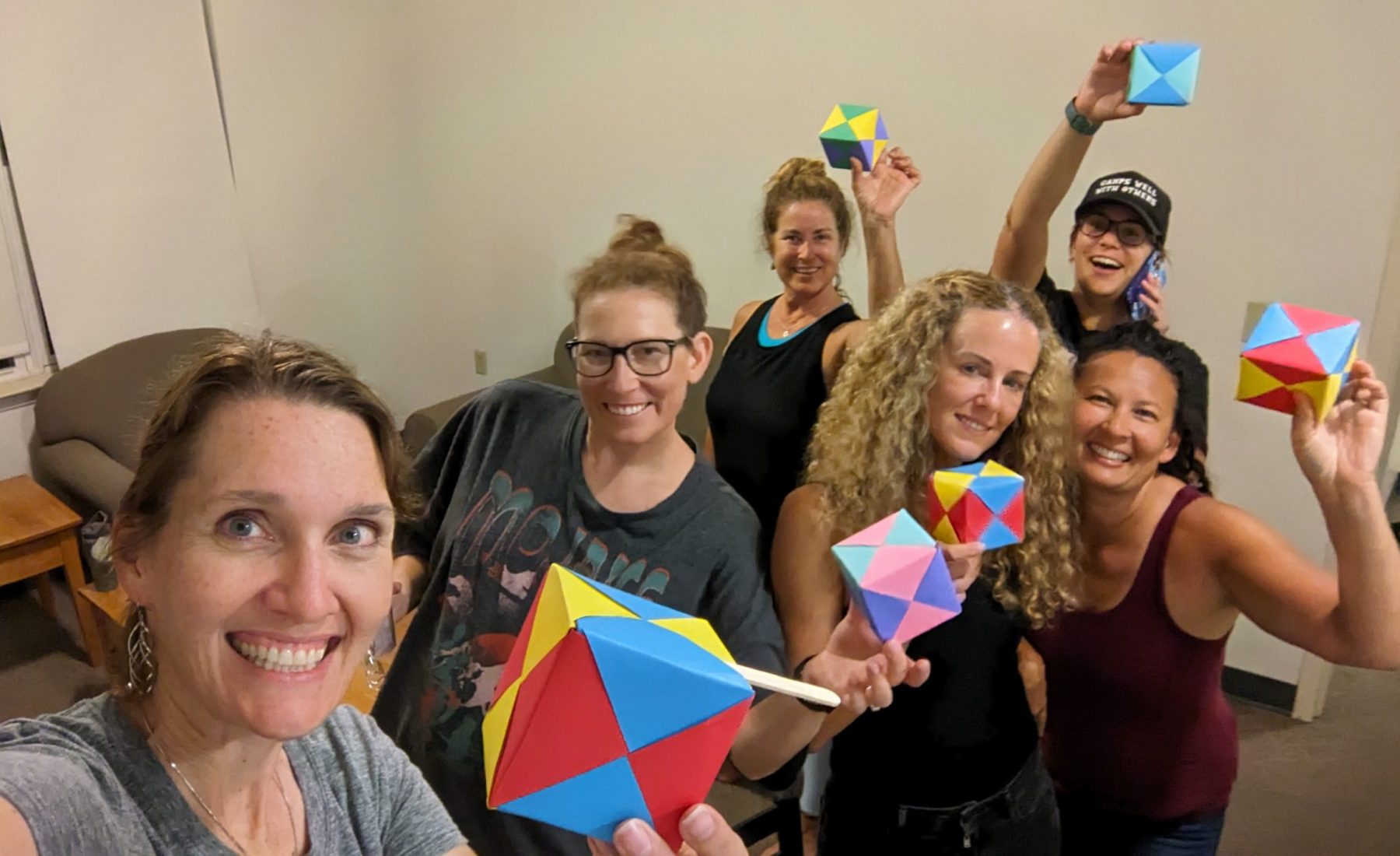
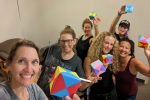
- MATH ENRICHMENT BEYOND THE TEXTBOOKMODULAR ORIGAMIRachel McAnallen, University of Connecticut. All origami begins with putting the hands in motion. Understanding something intellectually and knowing the same thing tactilely are very different experiences. To learn origami, you must fold it. In this workshop the participants will build math models through the use of unit/modular origami. Inherent in all the folding is the wonderful world of transformational geometry. The participants will learn about the Platonic and Archimedean solids along with their duals and stellations and will leave the session with several models in hand. For those who have origami experience, not to worry, differentiation is alive and well. Bring patience, perseverance and a sense of humor to this workshop. A $6.00 fee is needed for a packet of origami paper.
- MORE THAN ACCOMMODATIONS: MEETING THE NEEDS OF THE TWICE EXCEPTIONAL LEARNER (GIFTED WITH ADHD, LD, OR ASPERGERS SYNDROME)Susan M. Baum, International Center for Talent Development. Gifted students with learning, attention, or social challenges have complex traits requiring specialized programs. Because these twice exceptional students have pressing needs to feel valued, efficacious, and accepted, simply finding the right accommodation to help them succeed is insufficient and often has undesirable side effects. In this strand we will describe a comprehensive approach for meeting their needs. Practical researched based strategies will be provided that address identification, talent development, access to challenging curriculum, and dual differentiation that offers appropriate accommodations. Time will be given for discussion and questions during each session.
- CREATING CHALLENGE FOR TALENTED READERSSusannah Richards, Eastern Connecticut State University, Willimantic, CT. This strand will focus on strategies to meet the needs of talented readers. We will discuss talented readers, who they are and what the recommended practices are for providing these students with experiences to help them grow as readers. Some of the issues that will be addressed include traits of talented readers; differentiation of reading instruction; the role of interest assessment; evaluating curriculum materials and books; and creating engaging reading experiences for talented readers. Participants will have an opportunity to plan reading experiences for talented readers. Handouts will include information on talented readers, teaching suggestions, and sources for materials to use with talented readers.
- USING RENZULLI LEARNING SYSTEMS IN YOUR CLASSROOM OR SCHOOLGara Field, University of Georgia, Athens, GA & Caroline Cohen, Heads-Up! Educational Consultant and Coach, East Windsor, CT. Join our guided introduction to the Renzulli Learning System, the new vehicle for delivering content through web-based resources in the format of the Enrichment Triad Model. Learn about all aspects of the system and see some of the exemplary websites contained in the database. Learn how to use different features in the system to maximize student learning. Practical suggestions for effective implementation with individual students and whole classes will be shared, along with independent student project guidelines, and ideas for making curriculum connections. Renzulli Learning is a great tool for providing differentiated learning resources for all students in your class. The vast resources in Renzulli Learning allow for students to tap into their creativity and explore topics of their interest.
- INSPIRING STUDENT RESEARCH: TOOLS & STRATEGIES FOR ENHANCING THE PROCESSJann Leppien, University of Great Falls, Great Falls, MT. If you want to assist your students in conducting Type III research and need some tools and strategies to ensure your success, this session is for you! Students of any age can begin to learn the skills for conducting active and authentic research to pursue questions that are of interest to them. This session will focus on the following: (1) integrating research investigations into the curriculum; (2) applying research methodologies and tools to the investigations; (3) managing the research process; and (4) accessing Internet sites that support the research process. Research project ideas will be shared with the participants along with some websites that provide resources for students who wish to conduct research investigations or independent studies telecollaboratively.
- SILK SCREEN PRINTINGVidabeth Bensen, House of Life Prints, Pittsboro, NC. Silk Screen Silk screen printing is an art medium that can be used to enhance most areas of the curriculum. Classroom teachers, g/t teachers, art teachers, and others find this printmaking process ideal for creating designs for T-shirts, cards, banners, posters, and prints suitable for framing. The first session is a step-by-step presentation of the process. Subsequently, participants will create their own original prints. Emphasis will be placed on using the process in the classroom. The studio will be open every day for participants to work with the instructor in small groups or individually. There is a $5.00 materials fee to cover the cost of supplies used in the studio. Screens and squeegees will be available for purchase so you can return to your school ready to start printing with your students.
- ENCOURAGING DIVERSE STUDENTS' ACCESS AND SUCCESS IN GIFTED SERVICESChristine Briggs, University of Louisiana-Lafayette, Lafayette, LA. The underrepresentation of culturally, linguistically, and ethnically diverse (CLED) students in gifted services ia a problem for many gifted programs across the country. What can be done to support CLED students and develop their gifts and talents resulting in increased access to gifted services? This strand will discuss promising practices used in programs from across the country including in school, after-school, summer, and Saturday programs. Strategy suggestions will be shared to support CLED students and nurture their latent or emerging talents.
- THE WONDERFUL WORLD OF WIKIS: POWERFUL TOOLS FOR THE CLASSROOMBrian Housand & Kristina Ayers Paul, University of Connecticut. "What's a wiki?" you might ask. A wiki is a web-based tool that allows users to create and alter online content with ease. In this strand educators will explore wikis from the inside out. We will start with the basics (What is it? How do we use it?), explore how the world outside of the classroom is using this collaborative tool, discuss how these outside resources affect our students (including the big bad wolf of wikis - Wikipedia!), and finally provide time and support for developing wikis to be used in the upcoming school year. Come join us as we take a whirlwind tour of the wonderful world of wikis!
- ENRICHMENT CLUSTERS: A PRACTICAL PLAN FOR REAL-WORLD STUDENT DRIVEN LEARNINGMarcia Gentry, Purdue University, West Lafayette, IN. In this hands-on, interactive strand, participants will learn how to develop, organize, and implement one very exciting component of the Schoolwide Enrichment Model. Enrichment Clusters afford time to come together to pursue authentic interests, solve problems, and create products and services for real audiences using advanced content and methods. Information from practitioners in every phase of implementation will be shared and will include a nuts and bolts, how-to-do-it question and answer session. Participants will be ready to return to their schools and put this program into motion. The book, Enrichment Clusters: A Practical Plan for Real-World, Student-Driven Learning, is required for this strand.
- THE SOCIAL AND EMOTIONAL DEVELOPMENT OF GIFTED STUDENTSMeredith Greene, Annapolis Valley Regional School Board, Nova Scotia, Canada. Do you like movies? TV? Cartoons? Music? Picture books? Comic strips? Do you want to better understand the inner lives of gifted teens? "Experience" some of the most common social and emotional challenges faced by gifted adolescents in this multimedia session.
- RENZULLI LEARNING SYSTEMS: TRAIN-THE-TRAINER MODULEGara Field, University of Georgia, Athens, GA. Learn strategies and techniques for how-to-train teachers in the use of Renzulli Learning Systems, including a hands-on, guided overview of the System, as well as practical suggestions for effective implementation with individual students and whole classes, highlights of exemplary resources, ideas for making curriculum connections, and the creation of assignments and projects.
Week Two Strands 10:30-12:00Monday, July 14
8:30-12:00Tuesday, July 15
- SCHOOLWIDE ENRICHMENT MODEL (SEM)Joseph S. Renzulli & Sally M. Reis, University of Connecticut. The general sessions of this strand (Monday & Tuesday) will provide an overview of The Schoolwide Enrichment Model (SEM) and the breakouts (Wednesday-Friday) will focus on specific strategies for implementing the model in a variety of schools with students of different ages and demographic backgrounds. The model, which is based on 30 years of research and development, is a comprehensive system for infusing "high-end learning" into total school improvement efforts while simultaneously challenging high achieving students. Specific strategies include the development of Total Talent Portfolios, Curriculum Modification Techniques, and Enrichment Teaching and Learning. Five books are recommended for all participants in this strand and are available for purchase at Confratute.
Breakout SEM Strands (Wednesday & Thursday 8:30-12:00, Friday 8:30-9:30)
- PRIMARY (Gr. K-2)Susan Baum, International Center for Talent Development; & Gail Herman, Garrett College, McHenry, MD & Lesley University, Cambridge, MA. This session will demonstrate practical strategies for implementing SEM in the primary grades. Play with the three different types of activities in the Enrichment Triad Model. Learn how to schedule and debrief Type I experiences by hearing a guest story teller. Explore ways to incorporate critical and creative thinking activities into your classroom and curriculum. Explore what Type III looks like at the Primary level. Other topics will include enrichment clusters, interest centers, and curriculum compacting.
PRIMARY (Gr. 3-5)Susan Griggs, SEM/DI Consultant, Westerly, RI. This breakout strand will guide participants with hands-on strategies for using the Schoolwide Enrichment Model in daily instruction. Topics will include various uses of the Total Talent Portfolio for the student-centered classroom, developing rigorous activities based on the Enrichment Triad Model, curriculum compacting with interest-based replacement activities, and a simulation of Enrichment Clusters. Active learning strategies will be used for processing the service delivery components of the SEM.
PRIMARY (Gr. 3-5)Mary Sullivan, University of Connecticut. This strand will offer a program overview in light of providing how-to strategies to fully implement SEM at the elementary level from the perspective of the SEM specialist. - MIDDLE SCHOOL/JUNIOR HIGHWayne Trembly, Mansfield Middle School, Mansfield, CT. Details, samples, examples, “how-to’s,” hands-on, and perhaps a field trip to an SEM school will be shared with participants. The hope is that during the breakout we can personalize SEM for your school and your situation. Please come prepared to let us know how we can help you to successfully implement SEM, or how we can assist you in bringing SEM to the next stage.
- SENIOR HIGHMeredith Greene, Annapolis Valley Regional School Board, Nova Scotia, Canada. Participants in this strand will consider key issues that influence successful implementation of SEM in high schools. Mini-lectures, small group discussions, and activities will focus on the major concepts of enrichment teaching and learning, the Secondary Enrichment Triad, programming options, and classroom strategies.
- ADMINISTRATORNora Friedman, South Grove Elementary School, Syosset, NY. This strand breakout is specifically geared to school principals. What you want to know about the link between SEM and assessments and standards, how to adapt SEM to your school, the best way to approach professional development, issues affecting SEM implementation, where to get funding, and tips for managing day-to-day business are just some of the nitty-gritty details that will be addressed. Opening Doors: The Administrator's Guide to the Schoolwide Enrichment Model and the Art of Schoolwide Enrichment: A Resource Guidebook for Teachers, Enrichment Specialists and Principals are recommended reading for this breakout.
- COORDINATORSNancy Eastlake, QuEST Program, W. Hartford, CT. Coordinators and facilitators will consider a variety of issues, strategies, and audiences as they begin to implement the SEM in K-12. Topics to be covered will vary, depending upon the needs of the participants, but are likely to include scheduling; coaching teachers; troubleshooting interest development centers, enrichment clusters, and Type III’s; budgeting; organizing; maintaining a healthy program; writing newsletters; creating five-year plans; thinking about the community; and conducting needs assessments.
- MULTICULTURAL POPULATIONSCatharina deWet, University of Alabama, Tuscaloosa, AL. We will explore principles of multicultural education and synthesize them with the principles of the Schoolwide Enrichment Model. We will look at characteristics of special populations of children and how to identify the high ability students in our classrooms. We will also brainstorm and plan Type I, II, and possible Type III activities, and think through differentiation for strengths while scaffolding for possible learning gaps, language, and cultural gaps.
- PRIMARY (Gr. K-2)Susan Baum, International Center for Talent Development; & Gail Herman, Garrett College, McHenry, MD & Lesley University, Cambridge, MA. This session will demonstrate practical strategies for implementing SEM in the primary grades. Play with the three different types of activities in the Enrichment Triad Model. Learn how to schedule and debrief Type I experiences by hearing a guest story teller. Explore ways to incorporate critical and creative thinking activities into your classroom and curriculum. Explore what Type III looks like at the Primary level. Other topics will include enrichment clusters, interest centers, and curriculum compacting.
8:30-12:00Tuesday-Thursday, July 15-17
8:30-9:30Friday, July 18
- MICROCOSMOSArden Georgi Thompson, Wiscasset Schools, Wiscasset, ME. Have fun learning how the Microworld can spark exciting, creative question asking, natural differentiation, and true cooperative learning in your classroom using low-cost or no-cost materials such as plastic soda bottles, bubbles, and mud. You will learn about earth’s history, create a macro/micro self portrait, make a microbial world, make yogurt, go microfishing, create microbial landscape paintings, sand slides, and much more. There will be a materials fee of $15.00 payable to the instructor at the first strand meeting.
8:30-9:30Friday, July 18
- EDUCACHING: A HIGH-TECH SCAVENGER HUNT THROUGH THE CURRICULUMSally M. Dobyns, University of Louisiana-Lafayette, Lafayette, LA. In this session participants will learn to use GPS handheld receivers and will seek content-laden “caches” around the UConn campus and in the surrounding area. The goals of the session are for participants to make connections to the differentiated teaching and learning they plan for their own students and to experience a hobby/sport that can engage them and their families for many years. Equipment will be provided, but if you have any of the following items, please bring them: GPS receiver, compass, or digital camera. We will be outdoors, so appropriate walking shoes, hat, sunglasses, and sunscreen will help you maximize these experiences. Don't be intimidated by the walk, however; caches have been placed near and far, high and low, and accessible to all who seek them!
- SILK SCREEN PRINTINGVidabeth Bensen, House of Life Prints, Pittsboro, NC. Silk screen printing is an art medium that can be used to enhance most areas of the curriculum. Classroom teachers, g/t teachers, art teachers, and others find this printmaking process ideal for creating designs for T-shirts, cards, banners, posters, and prints suitable for framing. The first session is a step-by-step presentation of the process. Subsequently, participants will create their own original prints. Emphasis will be placed on using the process in the classroom. The studio will be open every day for participants to work with the instructor in small groups or individually. There is a $5.00 materials fee to cover the cost of supplies used in the studio. Screens and squeegees will be available for purchase so you can return to your school ready to start printing with your students.
- STUDENTS ARE NEVER TOO YOUNG TO BE RESEARCHERS!Cindy Nottage & Virginia Morse, Active Learning Systems, Epping, NH. Looking for exciting ways to engage your students, integrate tested language arts skills into core curricula, and address the talents and needs of every student in your class? Search no more. In this hands-on strand, you will learn about The Independent Investigation Method (“Double I M”), a standards-based research model (K-12) being used in classrooms and special programs nationwide. You will experience how to teach all primary/intermediate students the basic skills of research and will see how G/T students can apply these skills to independent studies both as part of the regular curriculum and as enrichment. You will learn a variety of elementary-level strategies that can be used with either the 7 Steps of IIM or your own research model.
- MENTORING MATHEMATICAL MINDS: TEACHING MATH TO TALENTED ELEMENTARY STUDENTSTutita Casa, University of Connecticut. This strand provides an overview of research-based, innovative curriculum to meet the needs of talented elementary students. Participants will explore how to challenge and excite talented math students with hands-on activities from award-winning math units. Each unit involves students as practicing mathematicians in a particular career field from an archeological dig to a Himalayan expedition. Students learn to think and reason at high levels, carry on sophisticated mathematical discussions, and write about their thinking in student journals-just as real mathematicians do! The investigations combine advanced content based on the five major NCTM Content Standards (number, algebra, geometry, measurement and data analysis, and probability) with the best practices of gifted education.
- TECHNOLOGY UNTANGLED: EMPOWERING TEACHERS WITH THE TOOLS OF WEB 2.0Brian Housand, University of Connecticut. Untangle the confusion of Web 2.0 and transform your classroom into a powerful online learning environment. Build your own Blog! Construct collaborative writing projects with a Wiki! Produce a Podcast! Discover the hidden glories of Google! Learn to speak like a digital native! This strand will provide an overview of the best, free technology resources available and suggest ways to integrate these tools into your classroom.
- IGNITING IMAGINATION IN STUDENTS THROUGH SCIENCE INQUIRYDiana Payne & Nancy Heilbronner, University of Connecticut. So what is inquiry, anyway? True inquiry is part art and part science and can ignite a passion for learning in your students. Come discover the world of inquiry, develop investigable questions, and use process skills to explore science through engaging hands-on activities.
9:45-10:45Friday, July 18
- TEACHING STUDENTS TO CONDUCT HISTORICAL RESEARCH IN A DIFFERENTIATED LEARNING ENVIRONMENTSally M. Dobyns, University of Louisiana-Lafayette, Lafayette, LA. Primary sources, raw and rich evidence of the past, beg for interpretation. When students examine primary sources such as public records, personal documents, artifacts, epitaphs, maps, and photographs, the fascination is immediate, the curiosity is powerful, and the natural outcomes are meaning-making questions driven by each student’s personal interests and points of reference. High levels of student engagement provide fertile ground for the development and pursuit of essential questions in historical inquiry, leading to authentic student research in the discipline of history. This session will focus on utilizing the natural markers for differentiating instruction to facilitate students’ historical research process. ($5.00 materials fee)
- ANIMATION: LIGHTS! CAMERA! ACTION! DEVELOPING TYPE III AUDIOVISUAL PROJECTSGreg Murin, Hopewell Junction, NY & John Fogarty, Cannon Falls, MN. This strand provides instruction in guiding students through the process of creating stop-motion animation using a digital camera and a laptop computer. The use of computer equipment and programs will be demonstrated and practiced by participants as they create their own animated movies. This simple process can then be used by teachers in their own classrooms. An introduction to 3-D animation will also be given. A how-to lesson on stop-motion computer animation will set the stage for participant production. Music and narration will be added to the products as desired. A laptop computer with a digital camera will increase the participation, but are not necessary to take part in this strand.
- BOOKS AS HOOKS FOR CREATING LIFELONG READERSSusannah Richards, Eastern Connecticut State University, Willimantic, CT. This strand will include an overview of books that invite the reader to explore interests and ideas. In addition to the dozens of books and book lists that will be highlighted, specific focus on how to use books to meet the needs of gifted students will be emphasized. Featured books will include recently published fiction and non-fiction books that lead to critical and creative thinking experiences. Discussion and activities will focus on resources for locating and evaluating children’s books, information on children’s book publishing, strategies for sharing books with gifted students, and ways for students to respond to books. A medley of books from all genres will be used to illustrate how to create learning experiences for students. There will be many opportunities to examine and share great books.
- USING RENZULLI LEARNING SYSTEMS IN YOUR CLASSROOM OR SCHOOLSheelah Sweeny, University of Connecticut. Join our guided introduction to the Renzulli Learning System, the new vehicle for delivering content through web-based resources in the format of the Enrichment Triad Model. Learn about all aspects of the system and see some of the exemplary websites contained in the database. Learn how to use different features in the system to maximize student learning. Practical suggestions for effective implementation with individual students and whole classes will be shared, along with independent student project guidelines, and ideas for making curriculum connections. Renzulli Learning is a great tool for providing differentiated learning resources for all students in your class. The vast resources in Renzulli Learning allow for students to tap into their creativity and explore topics of their interest.
- COACHING TO SUPPORT DIFFERENTIATION & COMPACTINGCaroline S. Cohen, Heads-Up! Educational Consultant and Coach, East Windsor, CT. This hands-on strand will provide a simple, yet powerful technique for creating peer coaches who will train and support their colleagues in differentiation and curriculum compacting. Specific topics include: the creation and management of a differentiated classroom, flexible grouping, tiered assignments, curriculum compacting, differentiated assessment, and grading. Learn how to articulate what differentiation is and isn't and how to describe what teachers, students, parents, and administrators can expect to encounter in a differentiated classroom. Participants will have an opportunity to try coaching and being coached and will learn how to establish a successful peer coaching program in their schools.
- PROJECT WILD AQUATIC: AN INTERDISCIPLINARY SCIENCE PROGRAM FOR AQUATIC ECOSYSTEMSTerry Neu, Sacred Heart University, Fairfield, CT & Linda Bula, Mecosta-Osceola Intermediate School District, Big Rapids, MI. Aquatic WILD is an interdisciplinary education program emphasizing the environmental needs of both fresh and marine wildlife. The goal is to assist learners in developing awareness, knowledge, critical thinking skills, and the investigative skills to make informed decisions concerning wildlife and the environment. Upon completion of this class, participants will receive the Aquatic curriculum guide which contains 50 lessons for students ranging from Kindergarten to the 12th grade. Activities include simulations like “Turtle hurdles” in which participants discover the trials of being a sea turtle as they evade sharks and seagulls to “where have all the Salmon gone” an activity that encourages students to interpret and make inferences about fluctuations in fish populations from actual data. ($25.00 lab fee)
- MATH FOR THOSE WHO THINK THEY CAN'T DO MATH-YES YOU CANRachel McAnallen, University of Connecticut. Are you smart, a good reader who can’t understand why you can’t “do” math? Do you have students in your classes that fit the same bill? Mathematics is a language that needs to be spoken and our culture speaks it incorrectly. This workshop helps teachers clean up their math language and starts by calling numbers by their correct place value names. The participants will then learn that there are an infinite number of ways to add, subtract, multiply, and divide. The learners are encouraged to use their own creativity to do basic operations. This session also deals with the algebraic connection between what we teach 2nd and 3rd graders and what we teach the 9th grade algebra student. Developmental theory, multiple intelligences and different learning styles are emphasized which should enable teachers to help their students to understand math concepts from the concrete stages to the abstract.
- THE ART OF SHADOW THEATRE: THE ULTIMATE ENRICHMENT TOOLKristin Berman, The College of New Rochelle, New Rochelle, NY. From the hand shadows of early cave dwellers to the ancient emperors of China to Broadway, the magical art of shadow theatre has been used for millennia in every form of theatre. Learn the special effect techniques of this powerful mode of expression as you create all the components for your own theatre piece using principles of creative problem solving, science, engineering, art, and storytelling. There is a job for everyone: building the stage, writing the script, creating the puppets with their moving mechanisms, composing the sounds, and presenting the performance. Don’t miss this powerful secret of illusion, and learn a skill that will lead to compelling classroom engagement and a unique way to explore and express the imagination! Resources will be provided.
- RAISING STUDENT ACHIEVEMENT THROUGH CLUSTER GROUPING AND DIFFERENTIATIONMarcia Gentry, Purdue University, West Lafayette, IN. Total school cluster grouping is a logical, research-based model that helps teachers improve the achievement of all students. Differentiation must accompany any form of grouping and provides teachers with a powerful tool to reach their individual students. In this strand you will learn the what, the why, and the how of the model and investigate student-based differentiation strategies that will encourage important, quality work from students. Site-specific implementation suggestions will be considered and participants will leave with enough information to return home and implement the model.
- CREATING STUDENT MOVIES WITH YOUR MACFrank Sineni, St. Paul Public Schools, St. Paul, MN. The world of moviemaking is coming to the classroom! Participants in this strand will learn to enhance student products and their own presentations using Apple's iMovie. Participants are encouraged to bring digital movie or still cameras as well as their own Macintosh laptops to add to their learning experience. Creative beginners are welcome!
- USING SEM TO CLOSE THE ACHIEVEMENT GAP: A FOCUS ON STRENGTHS AND TALENTSMargaret "Peg" Beecher, West Hartford Public Schools, West Hartford, CT. This strand will highlight how the Schoolwide Enrichment Model (SEM) can be implemented in conjunction with a rigorous, challenging curriculum in order to challenge all children to achieve their personal best and, thus, close the achievement gap. This strand will walk participants through a School Improvement Planning process and demonstrate how to effectively integrate SEM into all aspects of the learning environment. Curriculum standards and best practices, enrichment teaching and learning, new models for differentiating curriculum in all curricular areas, after school enrichment programs and other innovative practices will be highlighted. Participants will have an opportunity to share and discuss ideas with each other as they create their own unique plan of action for their school/district.
- DIFFERENTIATING THE CURRICULUM THROUGH THE ARTSBarry Oreck, Professional Development, New York, NY. Drama, music, and movement activities can be woven into the curriculum to deepen understanding, build learning and problem solving skills, and improve both verbal and non-verbal communication. This strand will help participants use the arts to build a creative, cooperative classroom environment and to maintain an artistic attitude amidst the pressures of the school day. Participants will learn and practice the skills needed to facilitate authentic arts experiences in the classroom and to effectively adapt arts activities to enhance other areas of the curriculum. Over the course of the week participants will learn and practice a variety of activities that can be adapted for use in literacy, social studies, science and math. We will also discuss how to identify artistic talent in students and how to assess artistic products and processes.
- UNLEASHING THE POWER OF POWERPOINTJanine Firmender, Stony Brook Elementary School, Rockaway Township, NJ. Microsoft PowerPoint is a powerful tool in the hands of today’s students and their teachers. It can be so much more than a simple presentation program. Learn how to assist your students in creating engaging presentations and interactive multimedia projects, beyond the bulleted templates, with simple PowerPoint functions that you have yet to discover. Participants in this strand will utilize PowerPoint as 1) a means to building creative presentations, 2) a graphic design program, 3) an interactive A/V program to display and organize course content, and 4) a format for audio and video productions. Expertise using PowerPoint is not necessary.
- BOOKMAKINGCindy Lassalle, ESA Lower School, Lafayette, LA. At each meeting of this hands-on strand, participants will create several small books to accumulate a sampler set of cut, folded, sewn, and/or glued books. They will explore kinds of, purposes for, and shapes of books to stimulate and challenge their creativity and provide ways to learn and to demonstrate knowledge in any curriculum area. Participants will be encouraged to create images or text in at least one of the books. We will explore using some inexpensive, some recycled, and some artist quality materials. This can be both an exploration of self-expression and a practical resource. There will be a $5.00 materials fee payable to the instructor at the first strand meeting.
- HELPING STUDENTS SET GOALS, GET ORGANIZED, AND SELF-REGULATE BEHAVIOR FOR ACADEMIC SUCCESSAngela Housand, University of Connecticut. Help students learn to be more productive and self-motivated by setting clear goals, developing self-regulated behavior, and creating a goal-oriented environment both in school and at home. This strand will provide specific strategies for helping students self-regulate and organize their behaviors and study patterns to achieve academic goals.
- STRATEGIES TO TEACH MORE CREATIVELY WHILE TEACHING CREATIVITYGara Field, University of Georgia, Athens, GA. Not only do students enjoy learning more when they are taught creatively, they also learn the material better. From creating Sketchwords to enacting Brainstorming techniques, this strand will offer a variety of creativity training activities and teaching strategies to incorporate into your classroom.
- MOTIVATING STUDENTS: STRATEGIES TO REVERSE UNDERACHIEVEMENTDel Siegle, University of Connecticut. Why are some gifted children willing to tackle new challenges, while others seen insecure or uninterested? Are there strategies we can implement that promote an achievement-orientated attitude? While there are many factors that contribute to achievement, underachievementand achievementoriented students exhibit four key traits: 1) they believe that they have the skills to perform well, 2) they expect that they can succeed, 3) they believe what they are doing is meaningful, and 4) they set realistic expectations and implement strategies to successfully complete their goals. We’ll discuss how to improve student achievement by addressing these four factors with gifted and talented students.
- SYSTEMS AND MODELS IN GIFTED EDUCATIONE. Jean Gubbins, University of Connecticut. As educators, we reflect on students’ learning needs. We want to identify and nurture their obvious and potential talents and abilities, and we need to ensure that we use research-based findings to determine the following: Who are the gifted? How do we serve them? These questions cannot be dealt with separately; therefore, it is imperative to become familiar with research-based systems and models in gifted education that include an integrated set of principles and procedures to inform and guide us as we encourage students to learn at high levels. This session will feature several models in gifted education.
- PERSONAL STORIES: A FIRST STEP INTO THE MAGICAL WORLD OF STORYTELLINGSandy Bothmer, Education/Stress Management Consultant, Brookline, NH. Take the first step, leap, or plunge (however you see it) into the magical world of storytelling! You will work with a differentiated process for remembering and learning your stories as well as storytelling enhancement techniques-posture, gesture, facial expression, voice, and pace-that make your stories come alive. In the sharing of your stories, you will begin to see how community grows out of the tellings. Take personal storytelling to your classroom and enjoy the literacy, problem solving, and affective benefits of this activity as it serves as a springboard to other storytelling experiences.
11:00-12:00Friday, July 18
- SEM READING FRAMEWORKRebecca Eckert, University of Connecticut. This session will provide an overview of and practical implementation suggestions for the enrichment-based reading curriculum, the Schoolwide Enrichment Model Reading Framework (SEM-R). This approach has three distinct goals: to increase enjoyment in reading, to encourage students to pursue independent reading at appropriately challenging levels, and to improve reading fluency and comprehension. This session will provide theory and tested practices that have enabled teachers to create classrooms filled with happy, reading students.
- MORE THAN ACCOMMODATIONS: MEETING THE NEEDS OF THE TWICE EXCEPTIONAL LEARNER (GIFTED WITH ADHD, LD, OR ASPERGERS SYNDROME)Susan M. Baum, International Center for Talent Development. Gifted students with learning, attention, or social challenges have complex traits requiring specialized programs. Because these twice exceptional students have pressing needs to feel valued, efficacious, and accepted, simply finding the right accommodation to help them succeed is insufficient and often has undesirable side effects. In this strand we will describe a comprehensive approach for meeting their needs. Practical researched based strategies will be provided that address identification, talent development, access to challenging curriculum, and dual differentiation that offers appropriate accommodations. Time will be given for discussion and questions during each session.
- TAKING YOUR STUDENTS INTO THE FUTUREMarianne Solomon, Future Problem Solving Program International. Future Problem Solving Program International was created in 1974 by E. Paul Torrance in order to provide a program that would help students think about the future while adding excitement to the gifted classroom. FPSPI still provides exciting curriculum that involves the creative problem solving process and futuristic thinking. Learn about the multiple components which address many different types of gifted thinkers: Team Booklet Component (global issues), Community Problem Solving Component (service learning), Scenario Writing Component (creative writing), and Action Based Component (non-competitive). Learn how to include each component in the gifted classroom.
- CURRICULUM COMPACTING: HOW TO DO ITDeb Goldbeck, Chapel Hill, NC. In this strand participants will learn a powerful differentiation management technique for meeting the needs of high ability students in the regular classroom. Used as a stand-alone strategy or as an essential component of the Schoolwide Enrichment Model, curriculum compacting adapts the regular elementary or middle school curriculum to individual students’ abilities and needs. Compacting allows teachers to streamline and eliminate unnecessary curriculum and instruction, and provide an optimal match of curricular content and expectations to the learner’s knowledge, ability, and styles. The text, Curriculum Compacting: the Complete Guide to Modifying the Regular Curriculum for High Ability Students, is strongly recommended for all participants taking this strand for credit and can be purchased at Confratute.
- THE SOCIAL AND EMOTIONAL DEVELOPMENT OF GIFTED YOUTHMeredith Greene, Annapolis Valley Regional School Board, Nova Scotia, Canada. Do you like movies? TV? Cartoons? Music? Picture books? Comic strips? Do you want to better understand the inner lives of gifted teens? "Experience" some of the most common social and emotional challenges faced by gifted adolescents in this multimedia session.
- MATH ENRICHMENT IN THE CLASSROOM – MODULAR ORIGAMIRachel McAnallen, University of Connecticut. All origami begins with putting the hands in motion. Understanding something intellectually and knowing the same thing tactilely are very different experiences. To learn origami, you must fold it. In this workshop the participants will build math models through the use of unit/modular origami. Inherent in all the folding is the wonderful world of transformational geometry. The participants will learn about the Platonic and Archimedean solids along with their duals and stellations and will leave the session with several models in hand. For those who have origami experience, not to worry, differentiation is alive and well. Bring patience, perseverance and a sense of humor to this workshop. A $6.00 fee is needed for a packet of origami paper.
- USING RENZULLI LEARNING SYSTEMS IN YOUR CLASSROOM OR SCHOOLGara Field, University of Georgia, Athens, GA & Caroline Cohen, Heads-Up! Educational Consultant and Coach, East Windsor, CT. Join our guided introduction to the Renzulli Learning System, the new vehicle for delivering content through web-based resources in the format of the Enrichment Triad Model. Learn about all aspects of the system and see some of the exemplary websites contained in the database. Learn how to use different features in the system to maximize student learning. Practical suggestions for effective implementation with individual students and whole classes will be shared, along with independent student project guidelines, and ideas for making curriculum connections. Renzulli Learning is a great tool for providing differentiated learning resources for all students in your class. The vast resources in Renzulli Learning allow for students to tap into their creativity and explore topics of their interest.
- HOW TO PRODUCE DIGITAL PRODUCTS USING TODAY'S CAMERA TECHNOLOGYKevin Simms, Salem City Schools, Salem, VA. Participants will be exposed to several types of digital cameras and computer software and encouraged to experiment with the wide variety of products that can be created. Digital collages, presentations, and photo storybooks are all examples of where you can go with a creative attitude and a little guidance. The end result will be a better informed consumer and a more comfortable and confident instructor. Participants are encouraged to bring their own cameras, software experiences, and enthusiasm to share with the rest of the class.
- TEACHING TO THE OTHER INTELLIGENCESCatharina deWet, University of Alabama, Tuscaloosa, AL. Do you envy that teacher down the hall who does the wacky things – poetry, music, dramas, raps, costumes? You can be that teacher that everyone envies for engaging students through multiple modalities. A practical, hands (feet, and voice)-on participatory workshop for teachers who want to do more than talk.
- CREATIVE MOVEMENT, MIME, AND DRAMATIC EXPRESSION: MAKING LEARNING CREATIVE AND KINESTHETICGail Herman, Garrett Community College, McHenry, MD & Lesley University, Cambridge, MA. Learn how communication arts such as mime, movement, and storytelling promote creative and “kinesthetic thinking.” Explore how they enhance the curriculum, and develop “perspective taking” and other affective/social skills. Guide students in transforming curriculum concepts from one medium to another through analogical thinking. Participants will learn warm-ups and improvisational explorations to create a positive atmosphere in their classrooms. In addition, they will be teaching character analysis, nonverbal communication, story structures, and creativity. The strategies in this strand are useful and field tested in more than writing. Make your art, science, social studies, enrichment clusters, and math classes come alive.
- UNLEASHING THE POWER OF POWERPOINTJanine Firmender, Stony Brook Elementary School, Rockaway Township, NJ. Microsoft PowerPoint is a powerful tool in the hands of today’s students and their teachers. It can be so much more than a simple presentation program. Learn how to assist your students in creating engaging presentations and interactive multimedia projects, beyond the bulleted templates, with simple PowerPoint functions that you have yet to discover. Participants in this strand will utilize PowerPoint as 1) a means to building creative presentations, 2) a graphic design program, 3) an interactive A/V program to display and organize course content, and 4) a format for audio and video productions. Expertise using PowerPoint is not necessary.
- BOOKMAKINGCindy Lassalle, ESA Lower School, Lafayette, LA. At each meeting of this hands-on strand, participants will create several small books to accumulate a sampler set of cut, folded, sewn, and/or glued books. They will explore kinds of, purposes for, and shapes of books to stimulate and challenge their creativity and provide ways to learn and to demonstrate knowledge in any curriculum area. Participants will be encouraged to create images or text in at least one of the books. We will explore using some inexpensive, some recycled, and some artist quality materials. This can be both an exploration of self-expression and a practical resource. There will be a $5.00 materials fee payable to the instructor at the first strand meeting.
- STRATEGIES FOR INTEGRATING THINKING SKILLS IN THE CLASSROOMGreg Murin, Hopewell Junction, NY. This strand provides participants with a series of thinking skills activities that can be easily inserted into their current curriculum to encourage students to think more carefully. Participants will examine the importance of thinking skills using various classroom starters, project ideas, brainteasers, games, and unit development. Methods to evaluate and assess these skills will be discussed. Various materials, sources, and websites to develop thinking skills will be shown. Participants will learn to build higher level thinking skill instruction into their classrooms. Decision making, critical thinking, problem solving, and creative instructional methods will be presented, with transfer of these as the focus.
- CREATING CHALLENGE FOR TALENTED READERSSusannah Richards, Eastern Connecticut State University, Willimantic, CT. This strand will focus on strategies to meet the needs of talented readers. We will discuss talented readers, who they are and what the recommended practices are for providing these students with experiences to help them grow as readers. Some of the issues that will be addressed include traits of talented readers; differentiation of reading instruction; the role of interest assessment; evaluating curriculum materials and books; and creating engaging reading experiences for talented readers. Participants will have an opportunity to plan reading experiences for talented readers. Handouts will include information on talented readers, teaching suggestions, and sources for materials to use with talented readers.
- STUDENTS ARE NEVER TOO YOUNG TO BE RESEARCHERS!Cindy Nottage & Virginia Morse, Active Learning Systems, Epping, NH. Looking for exciting ways to engage your students, integrate tested language arts skills into core curricula, and address the talents and needs of every student in your class? Search no more. In this hands-on strand, you will learn about The Independent Investigation Method (“Double I M”), a standards-based research model (K-12) being used in classrooms and special programs nationwide. You will experience how to teach all primary/intermediate students the basic skills of research and will see how G/T students can apply these skills to independent studies both as part of the regular curriculum and as enrichment. You will learn a variety of elementary-level strategies that can be used with either the 7 Steps of IIM or your own research model.
- SILK SCREEN PRINTINGVidabeth Bensen, House of Life Prints, Pittsboro, NC. Silk screen printing is an art medium that can be used to enhance most areas of the curriculum. Classroom teachers, g/t teachers, art teachers, and others find this printmaking process ideal for creating designs for T-shirts, cards, banners, posters, and prints suitable for framing. The first session is a step-by-step presentation of the process. Subsequently, participants will create their own original prints. Emphasis will be placed on using the process in the classroom. The studio will be open every day for participants to work with the instructor in small groups or individually. There is a $5.00 materials fee to cover the cost of supplies used in the studio. Screens and squeegees will be available for purchase so you can return to your school ready to start printing with your students.
- PRINCIPAL’S FORUMMargaret "Peg" Beecher, West Hartford Public Schools, West Hartford, CT. This strand is designed for principals who are implementing or expanding their enrichment or gifted and talented programs. The complex process of transitioning from a remedial to a strength-based paradigm will be discussed in the strand, as will the integration of enrichment teaching and learning with existing best practices. Methods for establishing standards, data-based decision making, teacher and student accountability, and the teacher evaluation process will also be highlighted. Effective leadership in this changing and challenging environment and the role of the principal in developing an enriched professional learning community will be discussed in an informal round table fashion. As a result of this strand, participants will create their own unique plan or add to their existing programs.
- TECHNOLOGY UNTANGLED: EMPOWERING TEACHERS WITH THE TOOLS OF WEB 2.0Brian Housand, University of Connecticut. Untangle the confusion of Web 2.0 and transform your classroom into a powerful online learning environment. Build your own Blog! Construct collaborative writing projects with a Wiki! Produce a Podcast! Discover the hidden glories of Google! Learn to speak like a digital native. This strand will provide an overview of the best, free technology resources available and suggest ways to integrate these tools into your classroom.
- HIGH-END LEARNING IN THE PRIMARY CLASSROOM: ENVIRONMENTS, STRATEGIES, AND TOOLS TO CHALLENGE ADVANCED THINKERS (Gr. K-2)Kristina Ayers Paul, University of Connecticut. Early childhood is a time filled with curious wonder and an insatiable love of learning. It is an especially critical time for high-end learners to be engaged, for their love of learning can easily be squashed by a learning environment that lacks personal challenge. In this strand we will examine the characteristics and needs of young, high-potential students, classroom environments that nurture high-end learning, and instructional tools and resources that can be utilized to provide challenge within and beyond the standard curriculum.
- ENRICHMENT CLUSTERS: A PRACTICAL PLAN FOR REAL-WORLD STUDENT DRIVEN LEARNINGMarcia Gentry, Purdue University, West Lafayette, IN. In this hands-on, interactive strand, participants will learn how to develop, organize, and implement one very exciting component of the Schoolwide Enrichment Model. Enrichment Clusters afford time to come together to pursue authentic interests, solve problems, and create products and services for real audiences using advanced content and methods. Information from practitioners in every phase of implementation will be shared and will include a nuts and bolts, how-to-do-it question and answer session. Participants will be ready to return to their schools and put this program into motion. The book, Enrichment Clusters: A Practical Plan for Real-World, Student-Driven Learning, is required for this strand.
- HANDS-ON ENRICHMENT IN SCIENCE (Grades 3-8)Richard Bothmer, Science Education Consultant, Brookline, NH. Are you scientifically challenged? Wonderful! We want you! Together we will dispel any science anxiety and replace it with scientific enthusiasm. The strand emphasis will not be on science facts, but on how science works. We’ll do lots and lots of labs. Some real. Some, well, fabulous, as when you trap and dissect a snorg. Don’t plan on sitting down much. We’ll be out and about finding fascinating science everywhere. Bring your traditional five tangible senses and your five intangible senses: Sense of Curiosity, Wonder, Imagination, Adventure, and Respect. Students walk into our classes loving science and it is our responsibility that they walk out the same way. We can do this. Piece of cake!
- BEHAVIORAL MANAGEMENT STRATEGIES FOR THE HARMONIOUS CLASSROOMErin Sullivan, University of Connecticut. Working with gifted students is exciting and fulfilling, but not without challenges. What do you do with the highly creative student intent on following his or her own vision—regardless of rules or expectations? How do you handle the gifted student who rarely completes homework? What about that high energy student who can’t or won’t stay in his or her seat? Researched-based behavioral management techniques have long been used by school psychologists to quell problems and promote prosocial behavior, but are rarely disseminated to teachers. These easy-to-implement interventions are equally appropriate for use in gifted and regular classrooms. They can also be highly effective. Whether you're a new teacher or a veteran educator, this strand may be the one to give you the tools for promoting classroom harmony.
- ENRICHING THE YOUNG NATURALISTJeff Danielian, LaSalle Academy, Providence, RI. The curriculum presented during this session has its roots in the Multiple Menu Model and presents a return to the roots of science education. By allowing students to pursue an interest in the natural world, focus on the methodologies needed to conduct field work, enable them to see and ponder the connections they perceive, and embark upon a problem solving approach to some naturalistic issue in their own neighborhoods, we can awaken the young naturalist, allowing them to understand and be aware of their attachment to the natural world. Participants will come to understand the concepts and underlying principles and receive handouts of various lessons. In addition, they will view samples of student work and be able to access the unit via the web at a later time.
- RENZULLI LEARNING SYSTEMS: TRAIN-THE-TRAINER MODULEGara Field, University of Georgia, Athens, GA. Learn strategies and techniques for how-to-train teachers in the use of Renzulli Learning Systems, including a hands-on, guided overview of the System, as well as practical suggestions for effective implementation with individual students and whole classes, highlights of exemplary resources, ideas for making curriculum connections, and the creation of assignments and projects.